


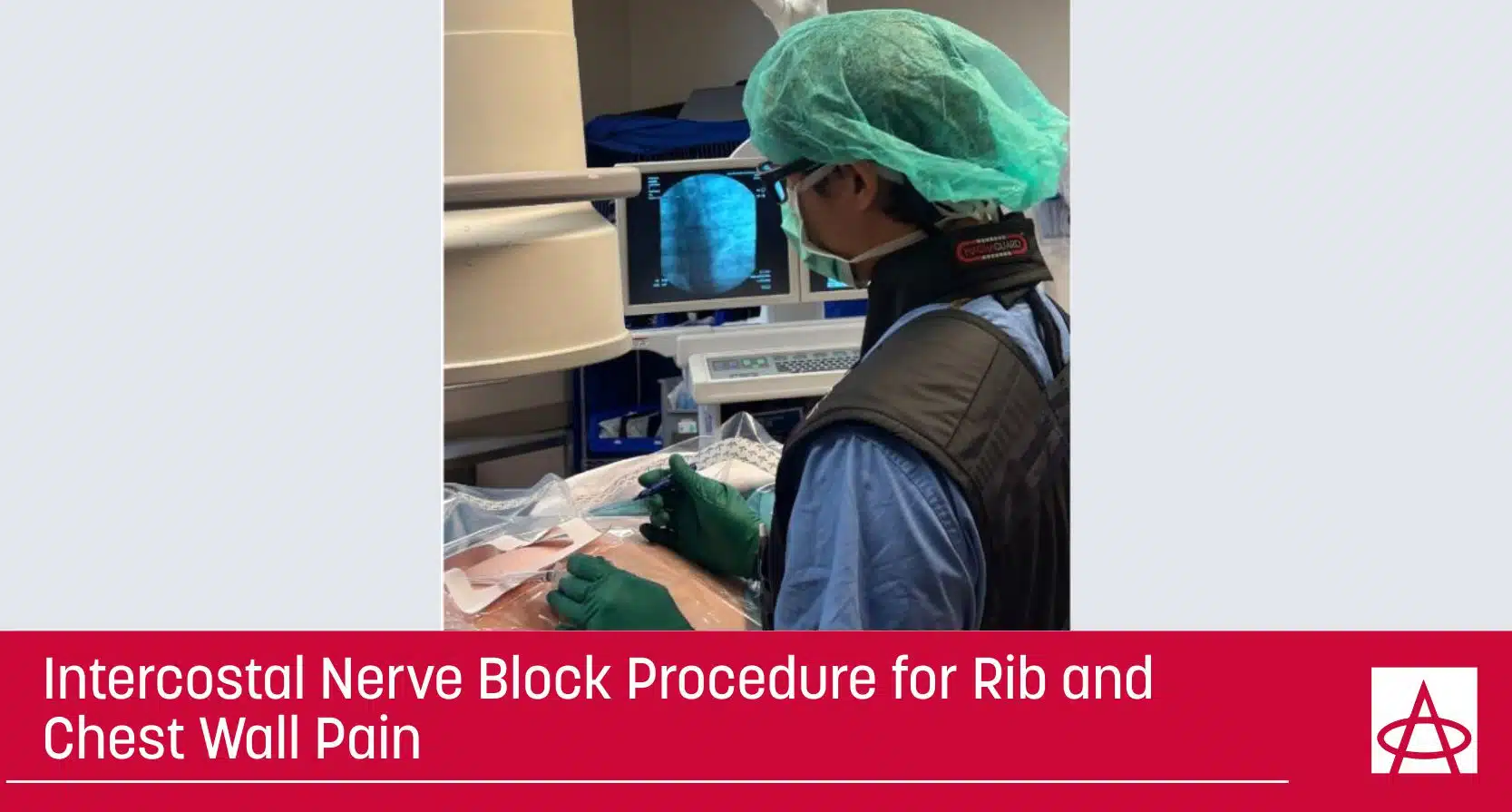
Intercostal Nerve Block Procedure for Rib and Chest Wall Pain in Austin, TX
Every breath, cough, laugh, or simple twist of the body depends on a group of muscles and nerves working together around your ribs. One of these is the intercostal nerve, which runs beneath each rib and carries pain signals from the chest wall. A rib fracture, surgery, shingles, or a muscle injury can irritate this nerve and cause sharp, burning, or stabbing pain.
Every day life becomes frustrating when every breath or small movement reminds you of the pain. Many people try to wait it out or manage it with pain medication, but temporary relief does not always treat the irritated nerve.
An intercostal nerve block procedure in Austin, TX, is recommended when pain has lasted for weeks or months without improving. Experienced pain management specialists at Advanced Pain Care use image guidance to guide the injection to the right location around the affected nerve. After that, the medication works to settle the irritated nerve and ease inflammation.
What Is an Intercostal Nerve Block?
An intercostal block is a treatment that helps when pain comes from the nerves between the ribs and does not settle with time or medication.
An intercostal nerve blockade works by calming the irritated nerve responsible for the pain. Your pain specialist uses image guidance to place the medication around the affected nerve, so the treatment reaches the right area.
Your intercostal injection usually contains a local anesthetic and a steroid:
- A local anesthetic that provides temporary numbness and immediate pain relief.
- A corticosteroid that reduces inflammation around the irritated nerve over the following days.
Some patients feel relief just after one treatment, while others may need to go for additional injections as part of a broader pain management plan.
At Advanced Pain Care, Dr. Raymond C. Yu is an experienced pain management specialist who performs image-guided intercostal nerve block procedures, with treatment tailored to each patient’s condition.
Benefits of Intercostal Nerve Blockade Injections
Most patients who visit our pain clinic in Austin, TX, have already tried home remedies, prescription medication, and physical therapy without getting the relief they hoped for. Our pain specialists recommend an intercostal nerve block for rib pain only when it is appropriate for your condition.
Here are some benefits patients may notice:
- Feel relief sooner: The numbing medicine begins to work shortly after the injection. Many patients feel the pain start to ease within a short time.
- Improved breathing comfort: Taking a deep breath starts to feel less painful as the irritation around the nerve settles.
- Greater ease with everyday activities: Everyday things like reaching, turning, or lifting light items don’t feel as difficult as they did before.
- Take fewer pain tablets: Some patients find they need pain medicine less often as their symptoms improve.
- Supports physical therapy: Physical therapy becomes easier when every movement is not limited by rib pain.
- No surgery required: Treatment is given through a targeted injection, without surgery or stitches.
- Outpatient procedure: Treatment is completed in one visit, so most patients return home the same day.
Meet Our Intercostal Nerve Block Specialist

Dr. Raymond C. Yu, MD,
He is a double board-certified pain management physician who specializes in image-guided, minimally invasive treatments. His patient-centered approach helps ensure every treatment plan is tailored to the underlying cause of pain and each patient’s recovery goals.
Conditions Treated with an Intercostal Nerve Block
Pain specialists may recommend intercostal nerve block injections for several conditions that affect the chest wall or ribs.
- Rib Fractures
- Chest Wall Pain
- Intercostal Neuralgia
- Post-Surgical Chest Pain
- Pain After Shingles
- Intercostal Muscle Strain
- Cancer-Related Chest Wall Pain
What to Expect After Nerve Block Treatment
Every patient responds a little differently after an intercostal nerve block. Some people notice changes within hours, while others need a few days before they begin to feel relief. Your pain specialist will talk you through what to expect based on your condition and the medication used.
- Immediate numbness: A feeling of numbness around the treated area is normal. The local anesthetic starts working soon after the injection and may provide early pain relief.
- When the steroid begins working: The steroid takes longer to work than the anesthetic. Many patients begin noticing the full effect over the next few days as the irritation around the nerve settles.
- Duration of pain relief: Pain relief is different for everyone. Your underlying condition, the severity of nerve irritation, and your body’s response to treatment all play a part in how long the results last.
- Possible repeat injections: One injection may be enough for some patients. Others may benefit from another injection if pain returns or your physician believes additional treatment may help.
- Follow-up appointments: The follow-up visit is simply to check how much relief you’ve felt and guide what comes next.
Why Choose Advanced Pain Care for Intercostal Nerve Block in Austin, TX?
Every patient’s pain has a different cause. Our pain management doctors in Austin, TX, first listen to your symptoms and understand your pain. Once the cause becomes clearer, they talk you through the options that fit your condition.
Here’s why many people choose Advanced Pain Care when searching online for a clinic for an intercostal nerve block near me:
- Experienced, board-certified pain management specialists who listen before recommending treatment.
- Image guidance during the procedure to help place the injection where it is needed.
- A personalized treatment plan based on what is causing your pain.
- Same-day evaluations when appointments are available.
- A full range of pain management treatments under one roof.
- Convenient clinic locations across Austin.

Medical Editorial Team
This content has been medically reviewed by the Advanced Pain Care Medical Editorial Team, comprising board-certified physicians and clinical experts in pain management. Our editorial team adheres to strict standards of medical accuracy, ensuring that all information is evidence-based, up to date, and reflective of current best practices in patient care.


