Overview:
Basivertebral Nerve (BVN) Ablation for Back Pain in Austin, TX
Basivertebral nerve ablation is a minimally invasive spine procedure used for chronic vertebrogenic lower back pain caused by irritated vertebral endplates. It is typically considered for patients with long-standing pain that does not improve with medications, physical therapy, or injections, and an MRI showing Modic changes. The procedure calms the basivertebral nerve so pain signals are reduced at the source, which can lead to lasting relief. At Advanced Pain Care, Austin, TX, expert evaluation and personalized treatment guide care.
What Is Basivertebral Nerve Ablation?
Basivertebral nerve ablation is a spine procedure used when chronic lower back pain is coming from inside the vertebrae rather than the muscles or surrounding tissues. It targets pain linked to changes in the vertebral endplates.
The basivertebral nerve’s role in chronic lower back pain
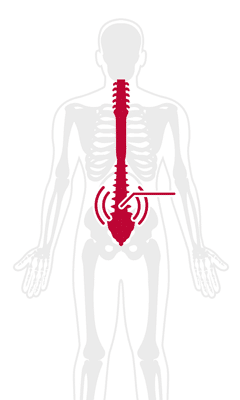
Inside the spine, a small nerve called the basivertebral nerve carries pain signals from the vertebral endplates. When changes in the vertebral endplates, such as Modic changes, stay for a long time, the basivertebral nerve can become sensitive and keep sending pain signals despite the resolution of the initial inflammation.
The Intracept procedure is commonly used to perform basivertebral nerve ablation. It uses radiofrequency energy to quiet the basivertebral nerve so it stops transmitting pain signals from inside the vertebrae.
What this procedure typically means for patients:
- No open surgery is required
- No implants are placed in the spine
- Targets specific sources of pain rather than only masking symptoms
- Most patients return home the same day
Symptoms That May Indicate You Need BVN Ablation (I)
Patients who may benefit from BVN ablation typically have persistent lower back pain that follows a vertebrogenic pattern and does not respond to routine conservative care.
- Chronic lower back pain lasting more than 6 months, often persistent despite treatment
- Pain that worsens during sitting, bending forward, or lifting objects
- No significant improvement after physical therapy, medications, or injections
- MRI showing Modic Type 1 or Type 2 changes in the vertebral endplates
- Pain makes it difficult to stand for long periods and carry out normal daily routines.
Conditions Treated With Basivertebral Nerve Ablation
BVN ablation is one of the advanced pain management techniques considered in specific cases of chronic lower back pain.
- Ongoing lower back pain caused by internal spine changes rather than muscle strain
- Back pain linked to age-related disc and bone wear with structural changes in the spine
- Long-lasting lower back pain that stays mostly in one area
- Pain related to inflammation of the vertebral endplates
In these cases, the pain often comes from inside the vertebrae, which is why targeting the basivertebral nerve may help reduce persistent discomfort. Anyone searching for a pain management doctor near me should consider an evaluation to identify the source of chronic lower back pain and explore appropriate treatment options.
Benefits of Basivertebral Nerve Ablation
This treatment offers a focused approach for managing chronic lower back pain by addressing the main source of discomfort within the spine and is commonly considered in a pain management clinic when conservative treatments have not helped.
Board-certified specialists with senior care experience
Experienced pain specialists carefully assess each case, particularly in long-standing or age-related spine conditions, to confirm an accurate diagnosis and ensure the treatment choice is appropriate and safe.
Personalized treatment plans
Treatment planning is based on individual symptoms, daily activity limits, overall health, and MRI findings. This helps ensure the approach is relevant to the actual condition rather than a general pain management plan.
Minimally invasive advanced procedure
The procedure uses image guidance and minimally invasive techniques for precise treatment. Since there are no open surgical cuts or implants, recovery is generally smoother compared to traditional spine procedures.
Why Choose Advanced Pain Care, Austin, TX, for Basivertebral Nerve Ablation?
Experience and accurate diagnosis are important when considering BVN ablation. Here are some reasons patients choose Advanced Pain Care.
- In Austin, experienced pain management doctors perform the BVN ablation procedure using advanced imaging guidance.
- Every decision is based on clinical findings and MRI results, so that the treatment is only offered when it truly matches the pain pattern.
- Treatment planning looks at symptoms, how the pain is affecting day-to-day life, and overall health before deciding the next step.
- The team has strong expertise in minimally invasive spine procedures. Patients benefit from more precise treatment and a smoother recovery process.
- Help with insurance is also available at our pain care clinic, so the process feels less stressful for patients.
Frequently Asked Questions
Q: Is basivertebral nerve ablation painful?
A: Anesthesia is used during the procedure at our pain management clinic, so there is no pain while it is being performed.
Q: How long does BVN ablation last?
A: Many patients may experience long-lasting relief as the treated nerve stops transmitting pain signals in the same way.
Q: Can BVN ablation replace spine surgery?
A: It can help some patients avoid spine surgery in selected situations, but it is not meant for every type of spinal problem or as a replacement for surgery in general.
Q: How quickly will I feel relief after the procedure?
A: Some patients notice improvement within a few weeks, while in others the relief builds slowly over time as the spine settles after the procedure.
Q: Who should not get basivertebral nerve ablation?
A: Patients without Modic Type 1 or Type 2 changes on MRI, or those whose pain is coming from nerve compression or muscle-related causes, are usually not good candidates because the procedure may not match the actual source of pain.