Overview:
SI Joint Fusion Surgery in Austin, TX
When pain lingers in the lower back, buttocks, or pelvis, it’s often the little everyday moments that become frustrating. Simple things like standing in the kitchen, walking through a store, sitting through a meeting, or getting a full night’s sleep may become harder than they should be.
Many people are surprised to learn that the source of this pain is not always the spine. In some cases, the sacroiliac, or SI, joint is responsible.
SI joint fusion surgery may be an option if other treatments haven’t brought you relief.
At Advanced Pain Care, we do not rush into surgery. Before we discuss treatment options, we try to know exactly where your pain is coming from. Our team takes the time to confirm whether the SI joint is truly causing your symptoms so you can make decisions with confidence.
What Is SI Joint Fusion?
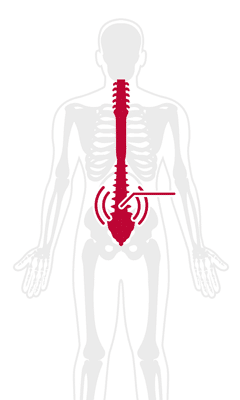
The sacroiliac (SI) joints are the connection between your spine and your pelvis. They help support your body during everyday activities and play a role whenever you stand, walk, sit, turn, or bend.
Although these joints move only a few degrees, even slight instability or abnormal motion can be enough to cause persistent pain and irritation.
How fusion stabilizes the joint
SI joint fusion is a procedure that joins the bones of the SI joint. During surgery, small implants are placed across the SI joint. Over time, the bones heal together, creating greater stability within the area.
The difference between conservative treatment and surgery
Many treatments are designed to calm symptoms for a period of time. The sacroiliac joint fusion procedure takes a different approach by addressing the instability that may be causing the pain in the first place.
SI joint fusion may be an option for people dealing with conditions such as:
- SI joint dysfunction
- Degenerative sacroiliitis
- SI joint instability
- Arthritis affecting the SI joint
- Certain cases of post-traumatic instability
When Is Sacroiliac Joint Fusion Surgery Recommended?
Most people who end up considering surgery for sacroiliac joint dysfunction have already been through a lot.
Sacroiliac joint fusion surgery may be recommended when:
- SI joint pain has been sticking around for months.
- Physical therapy has not made a meaningful difference.
- Medication isn’t easing your pain the way it once did.
- The results from injections don’t seem to last anymore.
- Radiofrequency ablation has not improved symptoms.
- Diagnostic injections show the SI joint is the source of the pain.
- Imaging reveals arthritis, instability, or damage within the joint.
- The pain keeps getting in the way of things you need to do.
Benefits of Minimally Invasive SI Joint Fusion
A minimally invasive approach helps make the procedure easier on the body by using a much smaller opening to reach the joint.
- Smaller incision: A smaller cut means a smaller area to heal.
- Less tissue disruption: Healthy muscles and tissue are left largely untouched.
- Reduced blood loss: As the incision is smaller, it generally leads to less bleeding.
- Faster recovery: Many people are up and moving around sooner than they expected.
- Less pain after surgery: There won’t be much soreness while you recover.
- Improved stability: The painful movement in the joint is reduced.
- Increased mobility: You may be able to participate in any activity you would like.
- Long-term pain relief: The pain doesn’t prevent you from living your life to the fullest.
Conditions Treated with Sacroiliac Joint Fusion Surgery
Minimally invasive SI joint fusion surgery may be recommended for conditions such as:
- SI joint dysfunction: Your SI joint isn’t working the way it should.
- Degenerative sacroiliitis: Normal wear over time has affected the joint.
- SI joint instability: Too much movement in the joint can make every movement hurt.
- Post-traumatic instability: The injury may be in the past, but the pain is still hanging around.
- Pregnancy-related instability: You expected the pelvic pain to fade after having your baby, but for some women, it doesn’t work out that way.
- Arthritis of the SI joint: The stiffness can show up in little moments throughout the day, not just when you’re active.
When the SI joint is clearly responsible for the pain, stabilizing it may help when other treatments have not provided lasting relief.
Why Choose Advanced Pain Care for SI Joint Fusion in Austin, TX?
SI joint pain can be frustrating for one simple reason. It does not always feel like SI joint pain. Many people spend months chasing what they believe is a back problem or a hip problem before discovering the SI joint is actually responsible for their symptoms.
That is why the right diagnosis matters.
At Advanced Pain Care, we take the time to understand what you’re feeling, where the pain starts, and how it affects your daily life.
- Our physicians spend every day helping people navigate all kinds of spine and joint pain.
- We don’t rush through appointments or jump to conclusions.
- Advanced imaging gives us a clearer picture of what’s causing your symptoms.
- Your care plan is built around you and what you’re dealing with.
- Extensive experience with minimally invasive surgical techniques.
- Ongoing support from diagnosis through recovery.
- Convenient Austin location and nearby areas.
- Committed to helping people get back to the things they love to do.
Whether you’re exploring your pain treatment options for the first time or seeking a second opinion on SI joint fusion, our pain management specialist in Austin, TX, can help you take an informed next step.
Frequently Asked Questions
Q: Is minimally invasive SI joint fusion painful?
A: It’s common to feel a little sore after surgery, though that usually gets better with time.
Q: What is the recovery time after SI joint fusion surgery?
A: Many patients are up and walking soon after the procedure. Recovery continues over the next several months.
Q: Will I need physical therapy after surgery?
A: Usually, yes. Physical therapy can help you return to your normal, everyday activities sooner.
Q: How successful is sacroiliac joint fusion surgery?
A: Many people find that they can do more of the things that pain was holding them back from.
Q: What happens if SI joint dysfunction is left untreated?
A: Over time, the discomfort can make simple things feel more difficult than they should.